Disease Information

Understanding Liver Fluke in Beef Cattle

Fasciola hepatica is a leaf-shaped parasitic flatworm that lives in the liver and bile ducts of infected cattle. This resource covers the biology, clinical signs, economic impact, and integrated control strategies every producer should know.

80 lbs

Average missed weight gain due to presence of liver flukes.

$2B+

Estimated annual global economic losses from liver fluke in livestock

$40M+

Annual cost to the US cattle industry alone — a fraction of the global burden

"Drug treatment is the mainstay of control and needs to be applied considering the life cycle and epidemiology of the parasite."
Howell et al., Vet Clin North Am Food Anim Pract, 2020

Producer Resource

Common Questions About Liver Fluke

Answers grounded in current veterinary science and COWS (Control of Worms Sustainably) guidance. For herd-specific protocols, always work with a licensed veterinarian.

Biology3 questions

The Fluke Life Cycle

  • Fasciola hepatica is the common liver fluke — a parasitic flatworm that infects the bile ducts and liver tissue of cattle, sheep, and other livestock. Damage to the liver results in clinical disease and significant production losses including reduced weight gain, lower milk output, poor reproductive performance, and in severe cases, death. F. gigantica causes similar disease in tropical regions, while Fascioloides magna (the giant liver fluke) can cause high mortality in sheep but has relatively limited impact in cattle.

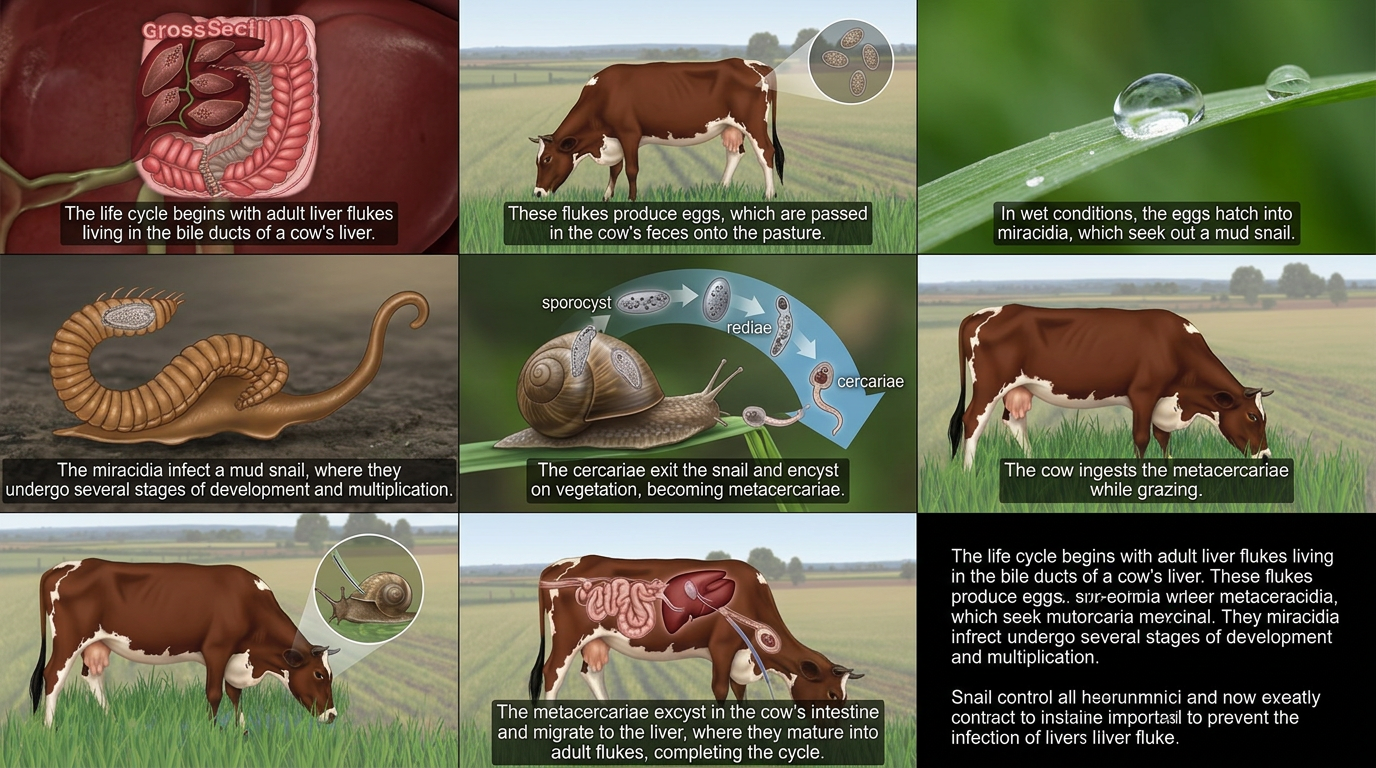
  • The fluke life cycle requires two hosts. Adult flukes in the bile ducts of infected cattle shed eggs that pass out in feces. Eggs hatch in wet conditions and release miracidia, which must find and infect an aquatic or amphibious snail intermediate host — most commonly Galba truncatula in North America. Inside the snail, the parasite multiplies through several larval stages before releasing cercariae into the environment. These cercariae encyst on vegetation as metacercariae — the infective stage for cattle. Cattle ingest metacercariae while grazing on wet pasture, and the juvenile flukes migrate through the gut wall and liver tissue before maturing in the bile ducts.

    The entire cycle from egg to adult can take as little as 18 weeks under ideal warm, wet conditions.
  • Fluke transmission requires suitable moisture and temperature for both snail survival and larval development. Wet, poorly drained pastures — particularly those with slow-moving water, boggy areas, or irrigation runoff — provide ideal snail habitat. Transmission peaks in fall, winter, and spring in fluke-prone areas of the Gulf Coast, Pacific Northwest, and other humid regions. Drought years can suppress snail populations temporarily, but wet seasons following drought often produce explosive fluke burdens.

Clinical Signs3 questions

Recognizing Fluke Disease

  • Acute fasciolosis results from massive migration of juvenile flukes through liver tissue, causing hemorrhage and necrosis. Signs include sudden death (particularly in sheep), severe anemia, weakness, abdominal pain, and rapid deterioration. In cattle, acute disease is less common than in sheep but can occur when animals ingest very large numbers of metacercariae over a short period — typically in late fall after grazing heavily contaminated pastures.

  • Chronic fasciolosis is far more common in cattle and often goes unrecognized. Signs include gradual weight loss, bottle jaw (submandibular edema from hypoproteinemia), pale mucous membranes, reduced milk production, poor body condition despite adequate feed, and lower conception rates. Many affected animals show no obvious clinical signs — the economic impact is "silent," showing up only in performance data and at slaughter when condemned livers are tallied.

    Subclinical fluke burdens are estimated to cost U.S. beef producers hundreds of millions of dollars annually in lost productivity.
  • Diagnosis can be made through fecal egg counts (though eggs may be absent in acute disease or early infections), serum liver enzyme panels (elevated GGT is a useful indicator), post-mortem liver examination, or ELISA-based blood tests that detect fluke antigens. Slaughter data — tracking the percentage of livers condemned for fluke damage — is a practical herd-level diagnostic tool. Consult your veterinarian for an integrated diagnostic approach.

Economics2 questions

Production & Economic Impact

  • Research consistently documents measurable losses across all production parameters in fluke-affected herds: reduced average daily gain (0.1–0.3 lb/day in subclinical infections), lower feed conversion efficiency, reduced carcass quality and dressing percentage, impaired reproductive performance (lower conception rates, longer calving intervals), decreased milk production in dairy cattle, and increased susceptibility to secondary infections including black disease (Clostridium novyi) in fluke-damaged livers.

  • Fluke-damaged livers are significantly more susceptible to secondary bacterial infections. Black disease (infectious necrotic hepatitis), caused by Clostridium novyi, is almost exclusively associated with liver fluke migration in sheep and cattle. Fluke burdens also suppress immune function, reducing vaccine efficacy and increasing susceptibility to respiratory and other diseases. Managing fluke burden is therefore an important component of overall herd immunity and biosecurity.

Management3 questions

Control & Treatment Strategies

  • Effective fluke control combines several strategies: strategic drug treatment timed to the fluke life cycle and local epidemiology; pasture management to reduce snail habitat (drainage, fencing wet areas, avoiding overgrazing near water); rotational grazing to reduce metacercariae ingestion; and nutritional support to maintain liver health and immune function. No single approach is sufficient — integration of multiple tools produces the best long-term outcomes.

  • Treatment timing should be based on local fluke epidemiology, pasture risk assessment, and the life stages present. In the Gulf Coast and similar regions, fall, winter, and spring are the highest-risk periods. A strategic treatment in late fall targets adult flukes before peak egg shedding; a spring treatment addresses flukes acquired over winter. Work with your veterinarian to develop a protocol appropriate for your region, herd history, and management system.

    Drug treatment is the mainstay of control and needs to be applied considering the life cycle and epidemiology of the parasite. — Howell et al., Vet Clin North Am Food Anim Pract, 2020
  • Dr. Harman's Liver Fluke Tonic is a plant-based liquid supplement formulated to support liver health and create a less hospitable environment for flukes during high-risk seasons. It is designed to complement — not replace — conventional flukicide treatment and pasture management. Used as part of an integrated protocol, it supports bile flow, reduces hepatic inflammation, and helps maintain liver function in animals under fluke pressure. Administer during peak risk periods (fall, winter, spring in fluke-prone areas) as a drenched tonic.

Seasonal3 questions

Turnout & Seasonal Protocols

  • Spring-born suckler calves that are still suckling are not likely to need treatment for worms at turnout — any larvae on the pasture will be consumed by their mostly-immune mothers. For first-grazing-season cattle such as dairy-cross beef calves and autumn-born weaned suckled calves, turn out onto low-risk pasture where possible (not grazed by cattle the previous year). If using pasture grazed by youngstock last year, consider carrying out faecal egg counts for gut and lung worms and treat only when necessary. For second-season calves, monitor liver and rumen fluke by faecal egg counting before turnout and treat with an appropriate product to kill adult fluke if indicated.

    Always speak to your veterinarian or animal health advisor about which flukicide product is appropriate for your herd and region.
  • Turn out first-grazing-season replacement heifers onto low-risk pastures where possible. Monitor liver and rumen fluke by faecal egg counting before turnout and treat with an appropriate product to kill adult fluke if necessary. For second-season heifers, take faecal egg counts before turnout and treat if indicated. Where there is a risk of lungworm infection based on farm history and buying-in policy, consider vaccinating youngstock before turnout and do a risk assessment with your veterinarian for older stock.

  • Cattle with unknown infection status represent a significant biosecurity risk. Quarantine new stock on arrival and treat with an appropriate flukicide before integrating them with the resident herd. Faecal egg counts and/or serology can help establish the fluke burden of incoming animals. Consult your veterinarian for a quarantine protocol appropriate to your operation and the source of the animals.

This page is an educational resource. Always consult a licensed veterinarian for diagnosis, treatment protocols, and withdrawal period guidance specific to your operation.

Ask About Our Tonic
Take Action

Protect your herd during peak fluke season.

Dr. Harman's Liver Fluke Tonic is formulated to support liver health and complement your integrated parasite management program. Available in 1 Liter.

What's in the Protocol

Integrated Fluke Management

  • Strategic Treatment Timing: Apply during fall, winter, and spring in fluke-prone areas.
  • Pasture Management: Fence wet areas, improve drainage, reduce snail habitat.
  • Faecal Egg Monitoring: Test before turnout and treat only when indicated.
  • Nutritional Liver Support: Dr. Harman's Tonic supports bile flow and hepatic health.
  • Dosing Guidance: Our team provides protocol recommendations for your herd size.
Available Sizes

1 Liter — individual animals & small herds

Browse products